
Concrete vs. Pavers
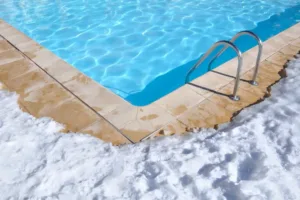
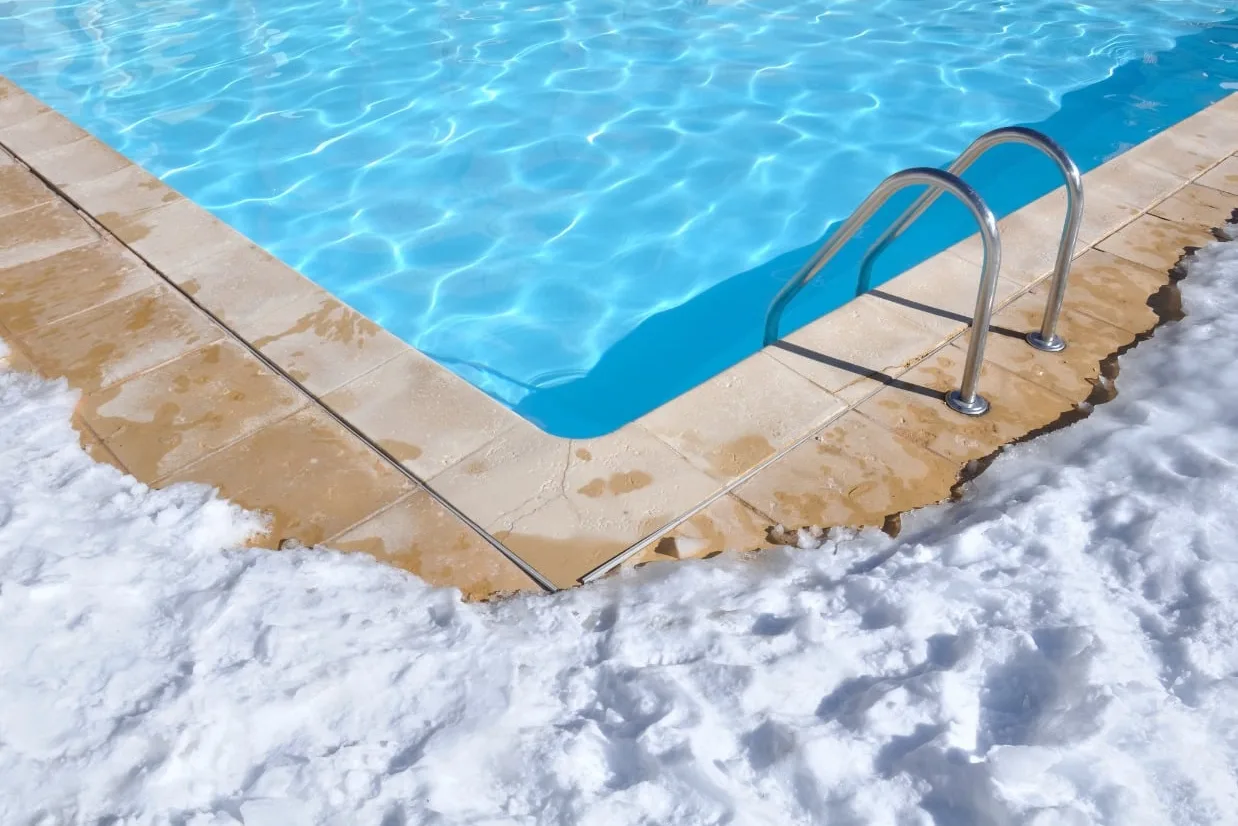
February is often the month when winter truly makes itself known in New Jersey. While December and January can be unpredictable, February tends to deliver consistently cold temperatures, frequent snowfalls, icy conditions, and repeated freeze-and-thaw cycles. These harsh weather patterns don’t just impact daily life, they play a major role in long-term outdoor construction decisions, especially when it comes to building a swimming pool and selecting the right patio material to surround it.
When planning a pool project, homeowners often focus on the pool itself: the shape, size, features, and finishes. However, the patio is just as important. Your pool patio affects safety, aesthetics, durability, maintenance requirements, and overall enjoyment of your outdoor space. In a climate like New Jersey’s, choosing the wrong material can lead to cracking, shifting, costly repairs, and frustration over time.
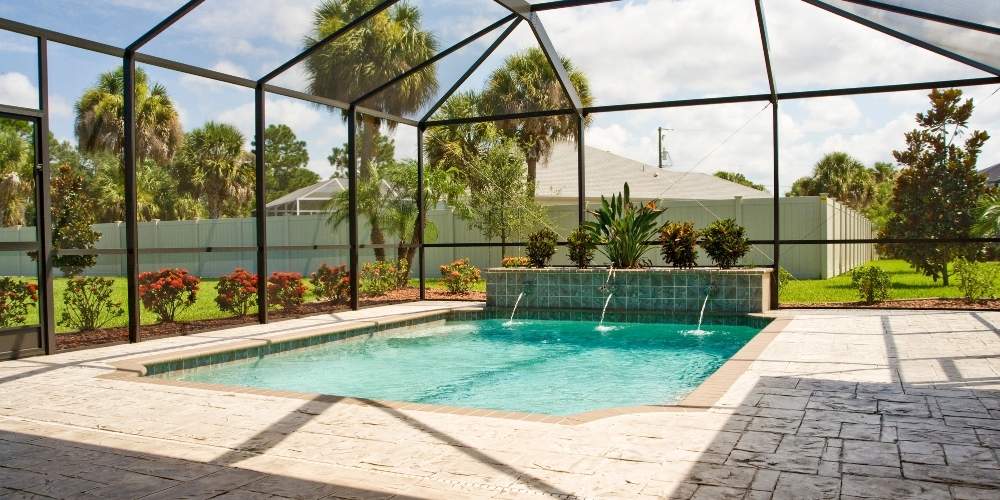
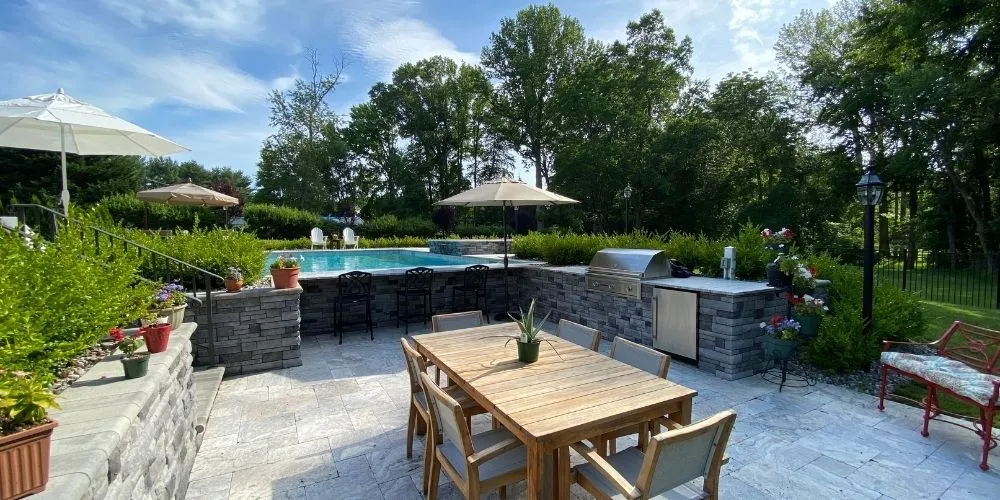
The two most common patio options for residential pools are poured concrete slabs and pavers. While both materials have their place, understanding how each performs in New Jersey’s demanding climate can help you make the smartest long-term investment for your home.
Concrete Pool Patios: Affordable Up Front, Costly Over Time
Concrete is often chosen because of its lower initial cost. For homeowners working within a tighter budget or looking for a quick installation, a concrete slab may seem like an appealing option. Concrete patios can also be finished in a variety of ways, including brushed, stamped, or colored finishes, allowing for some customization.
However, despite its popularity, concrete comes with several drawbacks, especially in regions that experience harsh winters like New Jersey.
One of the biggest concerns with concrete is cracking. Concrete is a rigid material, meaning it does not flex well when the ground beneath it shifts. In New Jersey, freeze-and-thaw cycles are unavoidable. Moisture seeps into the ground, freezes, expands, and then contracts as temperatures rise. Over time, this constant movement puts stress on concrete slabs, often resulting in visible cracks.
Another downside is maintenance. Concrete requires regular sealing to protect it from moisture penetration, staining, and surface damage. Without consistent sealing, concrete becomes more vulnerable to weather-related wear, discoloration, and surface deterioration. These maintenance costs add up over the years and are often overlooked during the initial planning stage.
Repairing concrete can also be challenging. If a slab cracks or becomes damaged, you’re typically left with two options: patch the affected area or replace a large section of the patio. Patching is often noticeable and can detract from the overall appearance of your pool area. Full replacement, on the other hand, is expensive, disruptive, and time-consuming.
While concrete may be less expensive initially, the long-term costs associated with repairs, sealing, and potential replacement often make it a less economical choice over time.
Why Pavers Are Ideal for New Jersey Pool Patios
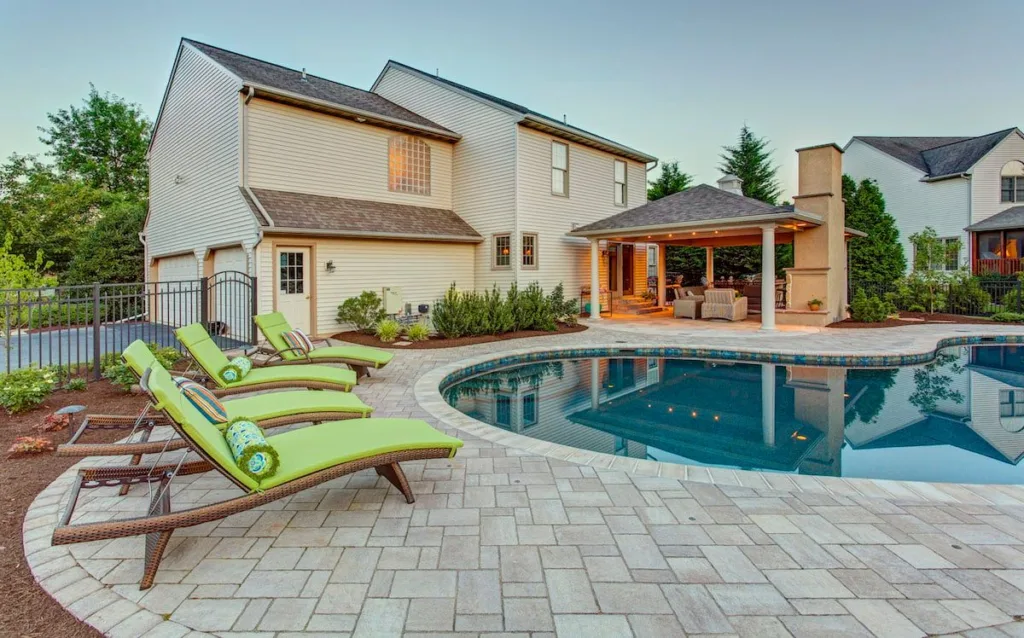
For homeowners looking for durability, flexibility, and long-term value, pavers are often the superior choice, especially in climates like New Jersey’s.
Pavers are designed to withstand extreme weather conditions, including freezing temperatures, snow, ice, and intense summer heat. Unlike concrete slabs, pavers are individual units, which allows them to move slightly with the ground beneath them. This flexibility makes them far more resistant to cracking caused by freeze-and-thaw cycles.
One of the standout advantages of pavers is their longevity. When properly installed, paver patios can last 50 years or more. Individual pavers can be replaced if damaged, without disturbing the surrounding area; something that simply isn’t possible with concrete slabs.
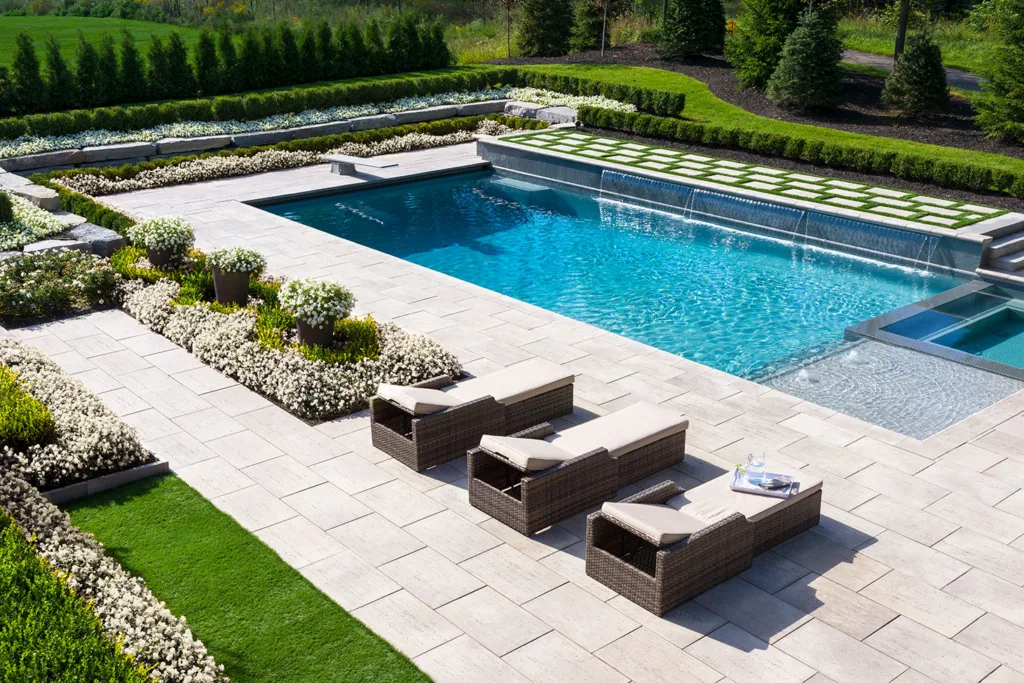
From a design standpoint, pavers offer unmatched versatility. They come in a wide range of materials, colors, textures, shapes, and sizes. Whether you’re looking for a modern, sleek aesthetic or a more natural, stone-inspired look, pavers can be customized to complement your home, landscaping, and pool design. This level of customization helps create a cohesive outdoor living space that enhances curb appeal and property value.
Proper Installation Makes All the Difference
The durability and performance of pavers depend heavily on how they are installed. In New Jersey, the preferred method is known as hardscape installation, which is specifically designed to handle moisture, drainage, and seasonal ground movement.
In a hardscape installation, the ground is carefully excavated and prepared. A compacted base of gravel is installed first, providing stability and proper drainage. On top of this base, a layer of sand is compacted to create a level surface for the pavers. Once the pavers are laid in the desired pattern, joints are filled with sand to lock them into place.
This method allows water to drain naturally through the patio rather than pooling on the surface or becoming trapped underneath. Proper drainage is critical in preventing frost heavily during winter months. As temperatures fluctuate, the pavers can shift slightly without cracking, then settle back into place when conditions normalize.
Compared to “wet setting” methods, where pavers are laid in mortar, hardscape installation is far better suited for New Jersey’s freeze-and-thaw cycles and long-term durability.
Seasonal Maintenance and Winter Care for Pavers
While pavers are incredibly durable, they do require some basic care, especially during the winter months, to maintain their appearance and performance.
One important consideration is snow removal. Metal shovels should be avoided when clearing snow from paver patios. The sharp edges can chip or scratch the surface of the pavers, leading to cosmetic damage. Instead, homeowners should use plastic shovels or snow blowers with rubber blades designed for hardscape surfaces.
De-icing products also matter. Traditional rock salt can be harsh on pavers and may cause surface damage or discoloration over time. Safer alternatives include sodium chloride blends designed for pavers, as well as sand or fine gravel. These options provide traction while preserving the integrity and appearance of the patio.
By following these simple winter care practices, homeowners can ensure their paver patio continues to look great and perform well for decades.
Long-Term Value and Peace of Mind
While pavers typically cost more upfront than concrete, they often prove to be the better financial decision in the long run. Their durability, ease of repair, low maintenance requirements, and resistance to New Jersey’s extreme weather conditions make them a smart investment for pool owners who want peace of mind.
Beyond functionality, pavers elevate the overall look of a pool area. A well-designed paver patio transforms a pool into a complete outdoor living space; one that’s perfect for entertaining, relaxing, and enjoying throughout the warmer months.
When building a pool in New Jersey, every material choice should be made with the climate in mind. From freezing winters to hot, humid summers, your pool patio must be able to handle it all. For homeowners looking to balance beauty, performance, and longevity, pavers consistently stand out as the superior option.
Find our more with Custom Pool Pros!